
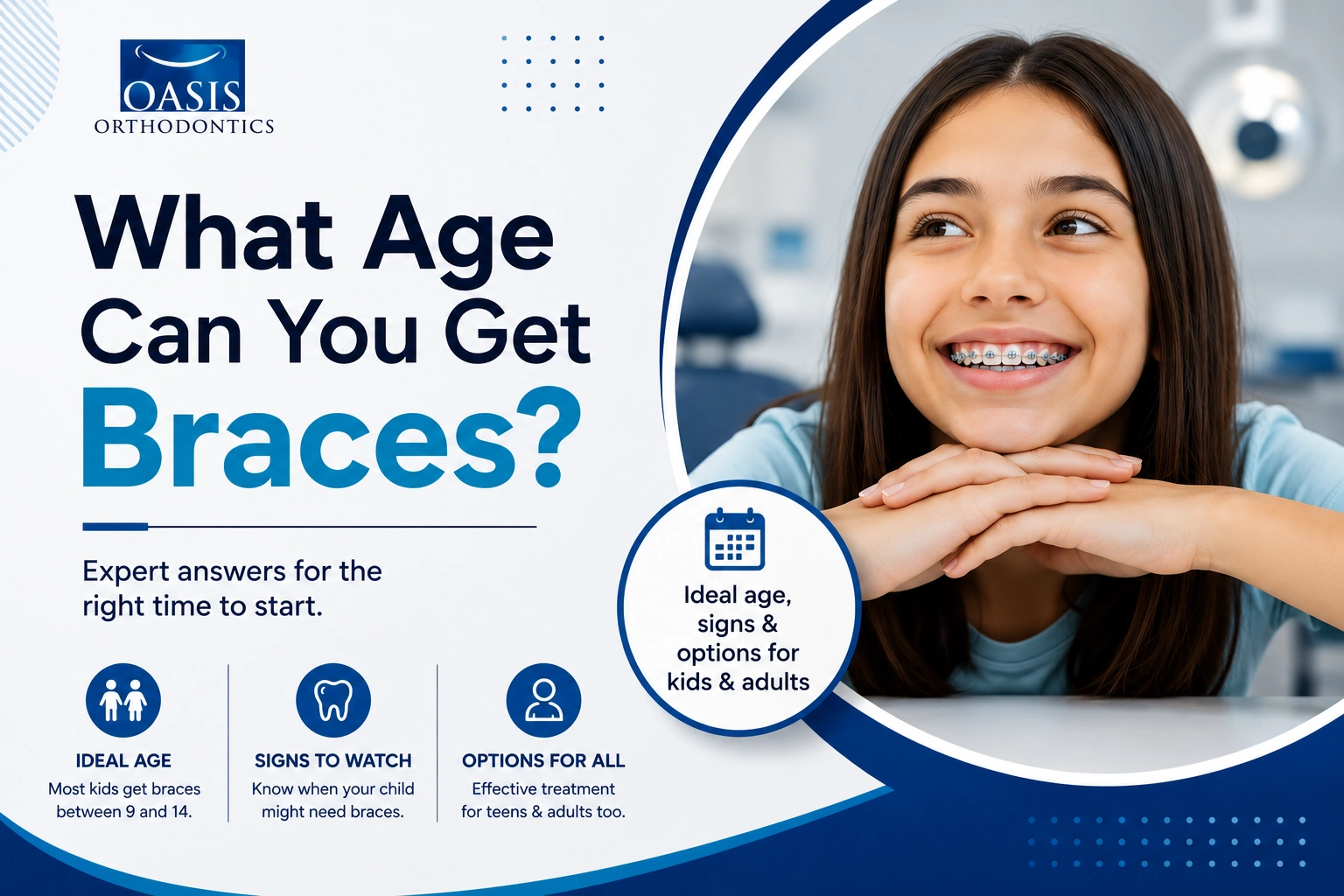
Most children get braces between the ages of 9 and 14, when their permanent teeth have erupted, and their jaws are still growing. The American Association of Orthodontists recommends bringing your child in for their first evaluation by age 7 to identify developing problems early.
Some children need early intervention as young as 7 to 9 years old to address severe crowding or jaw growth issues. Others benefit from waiting until all permanent teeth are in, typically around ages 11 to 13. Adults face no upper age limit for braces as long as their teeth and gums are healthy.
Your specific timing depends on dental development, not just age. Starting too early can mean multiple treatment phases, while waiting too long might miss the advantages of working with natural jaw growth.
Understanding the ideal timing for your situation helps you make informed decisions about when to seek evaluation and what to expect at different ages.
Why Age 7 Is the Magic Number for First Checkups
The American Association of Orthodontists recommends bringing your child in for their first orthodontic evaluation by age 7. This timing is not arbitrary.
At 7 years old, children typically have their first permanent molars and some permanent front teeth. This mix of baby teeth and permanent teeth gives orthodontists a clear picture of how the jaw is developing and how permanent teeth will erupt.
Catching problems early makes correction easier. Jaw growth issues, severe crowding, and bite problems are simpler to address when the jaw is still developing. Your orthodontist can spot these concerns before they become more complex.
Most children evaluated at age 7 do not need immediate treatment. The visit establishes a baseline, and the orthodontist monitors development over time to determine the best moment to begin treatment.
Early Intervention: When Younger Children Need Treatment
Some children benefit from starting treatment between ages 7 and 9, before all permanent teeth have come in. Orthodontists call this Phase One or interceptive treatment.
Early treatment targets specific problems that become harder to fix later. A child with a severely narrow upper jaw might need a palatal expander to create space before permanent teeth erupt. Correcting this early prevents more complex treatment down the road.
Significant jaw size differences between upper and lower jaws sometimes require early intervention. Guiding jaw growth during development can eliminate the need for jaw surgery later. Extreme crowding that might require tooth extraction in the future can often be resolved by creating space early.
Phase One treatment typically lasts 12 to 18 months. After completion, there is usually a rest period while remaining permanent teeth come in. Most children who complete Phase One still need Phase Two treatment with full braces during their teen years, but the second phase is often shorter and simpler.
The Peak Years: Understanding the 9 to 14 Window
Most children get braces between ages 9 and 14. This period offers specific advantages that make treatment more efficient.
Most permanent teeth have erupted by age 9 to 11, giving orthodontists the complete picture they need to plan treatment. The jaw is still growing, which allows teeth to move more easily. Orthodontists can work with natural growth patterns rather than fighting against finished bone development.
Children in this age range often experience growth spurts that orthodontists can use to their advantage. The same biological processes that naturally reshape bone during growth can be directed to move teeth into better positions.
Treatment typically takes 18 to 24 months at this age. Simple cases finish faster, while complex corrections take longer. Most children complete treatment before high school ends, giving them confidence during important social years.
Recognizing the Warning Signs in Your Child
Parents can spot some signs that orthodontic treatment might be needed, though professional evaluation is always necessary.
Crowded teeth that overlap or twist are clear visual indicators. Gaps between teeth, especially noticeable spaces in front, often require correction. Bite issues where upper teeth stick out far beyond lower teeth, or lower teeth sit in front of upper teeth, need attention.
Watch for functional problems too. If your child struggles to chew food properly, complains of jaw discomfort, or frequently bites their cheeks or tongue, these signal alignment issues.
Baby teeth that fall out much earlier or later than expected can affect how permanent teeth come in. Persistent mouth breathing, thumb sucking past age 5, or difficulty pronouncing certain sounds might indicate dental development concerns that orthodontic treatment can address.
Teen Treatment: Starting Later Still Works
Teenagers who missed earlier treatment windows can achieve excellent results. All permanent teeth are in by the teen years, allowing orthodontists to plan comprehensive treatment addressing all issues at once.
Teens often show better compliance than younger children. They understand the connection between following instructions and getting braces off sooner. They take responsibility for wearing rubber bands, maintaining oral hygiene, and attending appointments.
Treatment options for teens include traditional metal braces, tooth-colored ceramic braces, and clear aligners when appropriate. Each option suits different correction needs and lifestyle preferences.
Some jaw growth continues into the late teen years, which can benefit certain corrections. While not as dramatic as growth in younger children, this continued development still aids treatment.
Adults Can Get Braces at Any Age
Adult orthodontic patients represent the fastest-growing treatment group. There is no maximum age for braces as long as your teeth and gums are healthy.
Many adults never had the opportunity for braces as children. Others wore braces but did not maintain results with retainers, allowing teeth to shift back. Some adults simply decide to prioritize their smile and oral health later in life.
Adult teeth respond to orthodontic forces just as effectively as younger teeth. The biological process of bone remodeling works at any age. Treatment may take slightly longer because bone density increases with age, but the results are equally successful.
Clear aligners and ceramic braces appeal to many adults because these options are less visible during treatment. Appearance concerns in professional and social settings make discreet treatment important.
Healthy gums and teeth are essential for adult treatment. Gum disease must be controlled before starting braces. Any cavities need treatment. Bone loss from periodontal disease can limit options, making good oral health critical.
Common Questions About Braces Age Requirements
Can a 7 year old get braces?
Yes, some 7 year olds receive early intervention treatment called Phase One. This addresses severe crowding, significant bite problems, or jaw growth issues that are easier to correct early. Most 7 year olds only need evaluation and monitoring, with full braces coming later.
Can I get braces at 12?
Yes, age 12 falls within the ideal range for braces. Most permanent teeth have erupted by this age, and the jaw is still growing. Many orthodontists consider ages 11-13 optimal for starting comprehensive treatment.
Can I put braces at the age of 25?
Absolutely. Age 25 is common for adult orthodontics. As long as your teeth and gums are healthy, you can receive braces at 25 or any age. Many adults in their 20s, 30s, 40s, and beyond successfully complete orthodontic treatment.
Can I put braces at the age of 35?
Yes, 35 is a common age for adult braces. There is no upper age limit for orthodontic treatment. The key requirement is healthy teeth and gums. Many patients in their 30s, 40s, 50s, and older achieve beautiful results with braces or clear aligners.
Can a 10 year old get braces?
Yes, age 10 is within the common treatment window. Whether a 10 year old gets braces depends on their specific dental development. Some children have enough permanent teeth at 10 to begin comprehensive treatment, while others benefit from waiting another year or two.
Can you get braces at 8 years old?
Some 8 year olds receive early intervention treatment for specific problems like severe crossbites or jaw discrepancies. Full comprehensive braces at 8 are less common. Most 8 year olds who need treatment receive Phase One care targeting specific issues, with full braces coming later.
What is the worst age to get braces?
There is no worst age for braces. Every age has advantages. Younger patients benefit from jaw growth. Older teens and adults often demonstrate better compliance. The best age is when the patient is ready and committed to treatment, regardless of specific age.
Finding the Right Orthodontist for Your Family
Age provides general guidelines, but your child’s specific dental development matters more than numbers on a calendar. Professional evaluation determines the optimal timing for your unique situation.
The age 7 evaluation recommended by the American Association of Orthodontists gives you the information needed to plan ahead. This consultation is complimentary at most orthodontic offices and provides clarity about your child’s dental future.
Starting treatment at the right time leads to better outcomes. Too early can mean unnecessary multiple phases. Too late might miss the advantages of working with natural jaw growth.
Oasis Orthodontics in Markham provides expert evaluation for children and adults, helping families determine the ideal timing and treatment approach based on individual needs.