
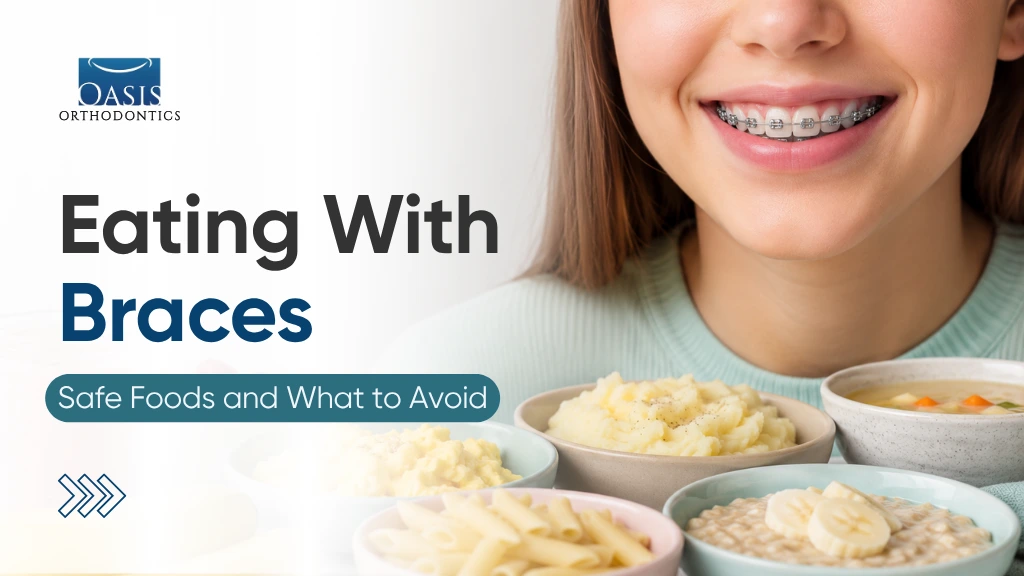
Getting braces does not mean overhauling your diet, but it does mean knowing which foods protect your brackets and which ones put your treatment at risk.
Soft foods are safe throughout treatment. Hard, crunchy, and sticky foods damage brackets and should be avoided. A handful of everyday foods, like whole apples and raw carrots, are fine once you make a small preparation change. What you eat throughout treatment directly affects whether brackets stay intact and whether you finish on schedule.
Patients wearing metal braces and clear braces follow the same food guidelines, since both use fixed brackets bonded directly to the teeth.
Why Certain Foods Cause Problems
Brackets are bonded to the surface of each tooth using a dental adhesive. The bond is designed to withstand normal chewing forces, but concentrated pressure from biting into hard foods or prolonged stress from chewy or sticky foods can dislodge a bracket or bend a wire.
Hard foods require significant biting force, which can snap brackets off or bend the archwire that runs between them. Sticky and chewy foods pull on brackets as you chew, applying a peeling force that works against the bond. Foods you bite into directly, like a whole apple or a raw carrot, create the same problem at the front teeth where brackets are most exposed to impact.
None of this means eating becomes complicated. Most patients adjust their food habits within the first week and find the restrictions manageable for the duration of treatment.
Foods You Can Eat Without Any Concern
A wide range of everyday foods are safe throughout treatment and require no modification.
Dairy products including soft cheeses, yogurt, pudding, milkshakes, and ice cream without nuts are all fine. They are soft, require minimal chewing force, and do not pose any risk to brackets or wires.
Eggs prepared any way are safe. Scrambled, poached, or soft-boiled eggs are particularly easy in the first few days after getting braces or after an adjustment when teeth feel tender.
Pasta and soft breads including soft tortillas, pancakes, and waffles are all safe to eat. Avoid very crusty bread or hard rolls, but most soft bread products present no issue.
Fish and seafood without bones are easy to eat throughout treatment. Fish requires very little chewing force and is a good protein option during the early days of treatment.
Soft-cooked meats like chicken, ground beef, and tender cuts are fine when cooked until tender and cut into small pieces. Avoid biting directly into bone-in cuts.
Bananas, berries, and applesauce are safe fruit options. The key with firmer fruits is to slice them into manageable pieces rather than biting into them whole.
Steamed and cooked vegetables are safe when cooked until soft. Mashed potatoes, steamed broccoli, and cooked carrots are all fine. Raw firm vegetables are addressed below.
Beans and tofu are both safe throughout treatment and require minimal chewing effort.
Foods That Are Fine With a Small Adjustment
Some foods that might seem problematic are actually safe with a simple preparation change.
Apples and pears are on the avoid list when eaten whole, because biting into a whole apple applies direct force to the front brackets. Cut into thin slices, they are perfectly fine to eat.
Raw carrots and celery are hard enough to risk bracket damage when bitten directly. Steaming or cooking them until soft eliminates the problem.
Corn is safe when cut off the cob. Biting directly into corn on the cob applies force across multiple brackets at once, which is why the whole cob version is on the avoid list.
Large sandwiches and burgers are manageable if cut into smaller portions so you are not opening your mouth wide and applying pressure across the front teeth.
Foods to Avoid Throughout Treatment
The foods below are consistently associated with bracket damage and broken wires. Avoiding them protects your hardware and keeps treatment on track.
Hard foods including hard candies, ice cubes, nuts, and hard taco shells require the kind of biting or crunching force that dislodges brackets. Chewing ice is one of the most common causes of bracket damage and should be stopped entirely during treatment.
Sticky and chewy foods including caramel, taffy, fruit roll-ups, licorice, and chewing gum are problematic because they grip brackets and apply a pulling force as you chew. Gum in particular wraps around brackets and wires in ways that are difficult to clean and can shift wire position over time.
Chewy breads and tough proteins including bagels, hard rolls, beef jerky, and pizza crust require sustained chewing effort that stresses brackets repeatedly throughout a meal. Pizza with a thin, softer crust is often fine. The issue is specifically with thick or chewy crusts that require tearing.
Popcorn deserves specific mention because the unpopped kernel fragments at the bottom of every bag are small, hard, and capable of wedging under brackets or snapping them off entirely. The soft outer portion of popcorn is less problematic, but the risk from the kernels makes it worth avoiding throughout treatment.
The First Few Days After Getting Braces
The first two to three days after getting braces placed, and after each adjustment appointment, are when teeth feel most tender. Chewing pressure on teeth that are actively moving is uncomfortable, and the soft tissue inside the mouth is adjusting to the brackets.
During this period, soft foods are genuinely more comfortable. Yogurt, applesauce, mashed potatoes, eggs, soup, and smoothies require minimal chewing. Rinsing with warm salt water helps with soft tissue irritation from new brackets. Over-the-counter pain relievers manage tooth soreness if needed.
How Food Choices Affect Your Treatment Timeline
Bracket damage does not just cause discomfort. It interrupts treatment directly. When a bracket comes off, movement on that tooth stops until the bracket is rebonded. If the break happens between appointments, that tooth makes no progress for days or weeks.If a bracket comes loose, contact your orthodontist as soon as possible rather than waiting for your next scheduled visit.For a broader picture of what daily life looks like with braces, from eating to cleaning to what to expect at adjustments, the life with braces page covers all of it. Over a treatment running 18 to 24 months, repeated breakages add up to real delays.
Avoiding restricted foods throughout treatment is one of the most direct ways a patient protects their own finish date.
Frequently Asked Questions
Can I eat pizza with braces? Softer pizza with a thin crust is generally fine when cut into smaller pieces. Thick, chewy crusts that require tearing are the issue.
Can I eat chocolate with braces? Plain milk or dark chocolate that melts easily is generally safe. Chocolate with nuts, caramel, or hard centres is not, because those additions introduce the properties of foods to avoid.
Can I eat chips with braces? Most hard, crunchy chips should be avoided. Very light, puffed chips that dissolve quickly are lower risk but still require caution.
Can I drink fizzy drinks with braces? Fizzy drinks are not a direct hardware risk, but acidity and sugar increase cavity risk while brackets make cleaning more difficult. Limiting them during treatment is advisable.
What should I eat the first week with braces? Soft foods requiring minimal chewing are best for the first few days. Yogurt, mashed potatoes, eggs, soft pasta, soup, bananas, and smoothies are comfortable options while initial tenderness settles.
Get Your Questions Answered Before You Start
Understanding what you can eat before you start makes the adjustment easier from day one. Most patients find the food habits normalize quickly and the restrictions become second nature within the first two weeks.
If you are ready to start or just want to understand what treatment involves before committing, book a consultation at Oasis Orthodontics. Dr. Khushee Sharma-Fung personally walks every patient through what to expect, including how to manage eating and daily life with braces, before treatment begins.