
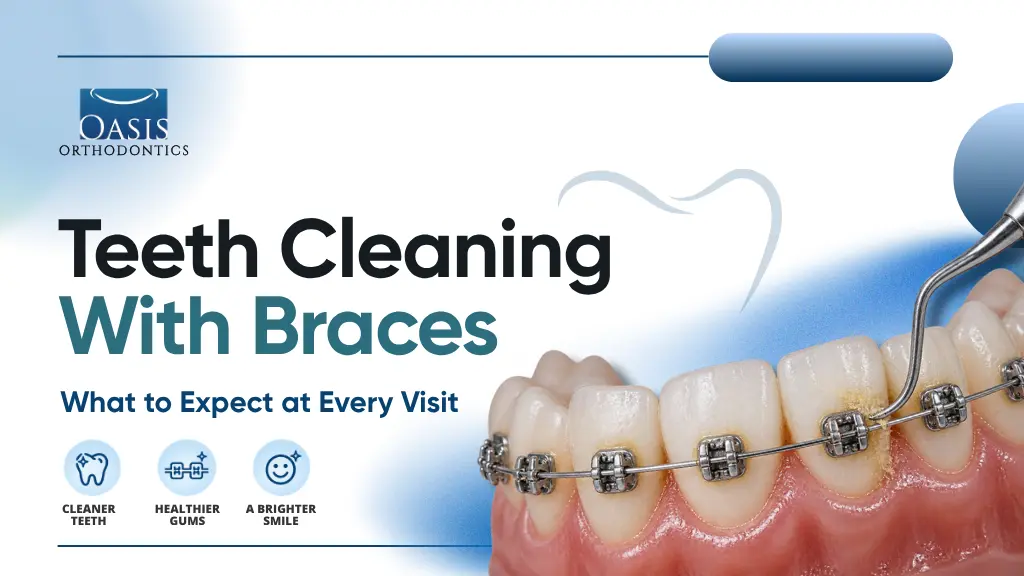
Patients in braces sometimes skip their regular dental cleaning appointments, assuming the hygienist cannot work properly around brackets and wires, or that the braces protect their teeth somehow. Both assumptions lead to real problems.
Yes, you can and should. Hygienists clean around braces every day. The appointment takes a little longer, but your hardware stays in place and your teeth get fully cleaned.
Cleanings during treatment matter more than cleanings at any other time, because braces create conditions where plaque and tartar build up faster and in places a toothbrush cannot reach.
Why Braces Make Cleaning More Urgent, Not Less
Brackets and wires create ledges, tight angles, and sheltered spaces that collect plaque throughout the day. Even patients who brush carefully after every meal miss areas where the bracket meets the tooth surface and where the wire runs close to the gumline. Patients with metal braces and those with clear braces face the same challenge, since both systems use fixed brackets bonded to the teeth.
When plaque sits in these spots long enough it hardens into tartar, which cannot be removed at home regardless of how thoroughly you brush. Tartar causes gum inflammation and, over time, can contribute to gum disease. It also creates the conditions for white spot lesions, the dull, chalky marks that sometimes appear on teeth when braces come off. White spot lesions are areas of early enamel damage and can be difficult to reverse once they form.
Professional cleanings remove tartar and reduce the plaque load around brackets, protecting both enamel and gum tissue throughout treatment. They also give the hygienist and dentist an opportunity to catch developing problems before they pause or complicate orthodontic progress.
How the Cleaning Works Around Your Braces
Braces stay in place during a standard dental cleaning. The hygienist works around them rather than removing them, and the appointment follows the same general structure as any cleaning with some adaptations.
The hygienist checks your gums first, looking for redness, swelling, or early signs of inflammation. Gum health matters during orthodontic treatment because irritated or unhealthy gums affect how teeth respond to movement. Healthy gums support steady progress. Unhealthy gums can slow things down.
Tartar removal uses hand tools and a small vibrating instrument that loosens buildup and rinses debris away. Both are designed to reach around brackets and along the gumline without disturbing the brackets themselves.
Between teeth, the hygienist threads floss beneath the wire using a special tool, or uses superfloss, a thicker type of floss designed to clean around brackets. Small interdental brushes may also be used to get into the tight spaces along the wire.
Polishing removes surface staining and any remaining plaque. The hygienist works carefully around each bracket to clean the exposed tooth surface.
If your dentist recommends it, a fluoride treatment may be applied at the end of the appointment to help strengthen enamel and protect against decay around brackets.
How Often to Get Cleaned While Wearing Braces
Most dentists recommend more frequent cleanings during orthodontic treatment than the standard twice-yearly schedule. Some suggest every three to four months for patients in braces, though the right interval depends on your gum health, how well you manage at-home care, and your dentist’s assessment.
More frequent visits make sense because plaque accumulates faster and in more locations with braces in place. Waiting six months between cleanings gives significantly more time for tartar to build up and for early problems to develop.
Your dentist will advise on the right schedule for your situation. If your home care is strong and your gums remain healthy, a longer interval may be appropriate.
What Happens If You Skip Cleanings During Treatment
Skipping professional cleanings during orthodontic treatment increases the risk of several problems that can affect both oral health and treatment outcomes.
Cavities can develop around brackets where plaque sits against enamel for extended periods. A cavity that develops during treatment may require pausing orthodontic progress to allow for restorative work before tooth movement can safely continue.
Gum disease develops when plaque and tartar are left along the gumline over time. Inflamed gum tissue bleeds easily, feels tender, and can swell around brackets. Prolonged gum problems can affect how teeth respond during treatment and may complicate orthodontic progress.
White spot lesions form where plaque has been sitting against enamel repeatedly over time. By the time braces come off, the marks may already be visible and can be difficult to reverse. Regular cleanings and good home care are the most effective prevention.
What You Can Do Between Professional Visits
Professional cleanings address what home care cannot, but consistent daily cleaning is what prevents problems from developing in the first place.
Brushing after every meal, or at minimum after breakfast and before bed, with a soft-bristled toothbrush removes food debris and loose plaque before it begins to harden. An orthodontic toothbrush with a V-shaped bristle cut fits around the wire more effectively than a standard brush.
Flossing daily requires more effort with braces, but skipping it allows plaque to accumulate between teeth where neither the toothbrush nor the bracket reaches. Floss threaders and superfloss make threading beneath the wire manageable. A water flosser can reach areas that traditional floss misses and is particularly effective for patients who find threading challenging. The Life with Braces page covers the specific tools and routines recommended throughout treatment.
Interdental brushes in the appropriate size for your bracket width clean along the wire and between brackets and gum tissue, reaching areas a standard toothbrush cannot access.
Fluoride toothpaste and, when recommended, a fluoride mouth rinse support enamel resistance between professional applications.
Frequently Asked Questions
Can you get your teeth cleaned with braces?
Yes, and you should. Dental cleanings are safe and important throughout orthodontic treatment. Hygienists use adapted techniques to clean thoroughly around brackets and wires without removing them.
Do orthodontists clean teeth?
No. Orthodontists specialise in moving teeth and correcting bites. Professional dental cleanings are provided by your general dentist and dental hygienist. Orthodontic appointments and dental cleaning appointments serve different purposes and should both continue throughout treatment.
How often should you get your teeth cleaned with braces?
More often than usual. Many dentists suggest every three to four months during treatment rather than every six months, but the right interval depends on your gum health, your home care routine, and what your dentist recommends for your situation.
What happens if you skip dental cleanings while wearing braces?
Skipping cleanings increases the risk of cavities around brackets, gum problems along the gumline, and white spot lesions on enamel. Any of these can disrupt treatment progress, and white spot marks can be difficult to reverse once they form.
Do braces need to be removed for a dental cleaning?
No. In almost all cases, braces stay in place and the hygienist cleans around them. Occasionally, if a section of wire limits access to a specific area, the orthodontist may remove that section beforehand, but most patients will never need that step.
Will the hygienist damage my braces?
No. Hygienists are trained to clean around braces safely. The tools they use remove tartar without disturbing the brackets or pulling them off the teeth. In rare cases where wire access is limited, the orthodontist may remove a wire temporarily before the appointment, but most patients do not need that.
Keep Your Teeth Healthy for the Smile at the End
Getting through orthodontic treatment with healthy teeth and gums means keeping up with both your orthodontic visits and your dental cleaning appointments. One without the other leaves gaps that affect the final result. Oasis Orthodontics in Markham, every patient receives oral hygiene guidance alongside their treatment plan. Book a consultation and get specific advice for your situation.