
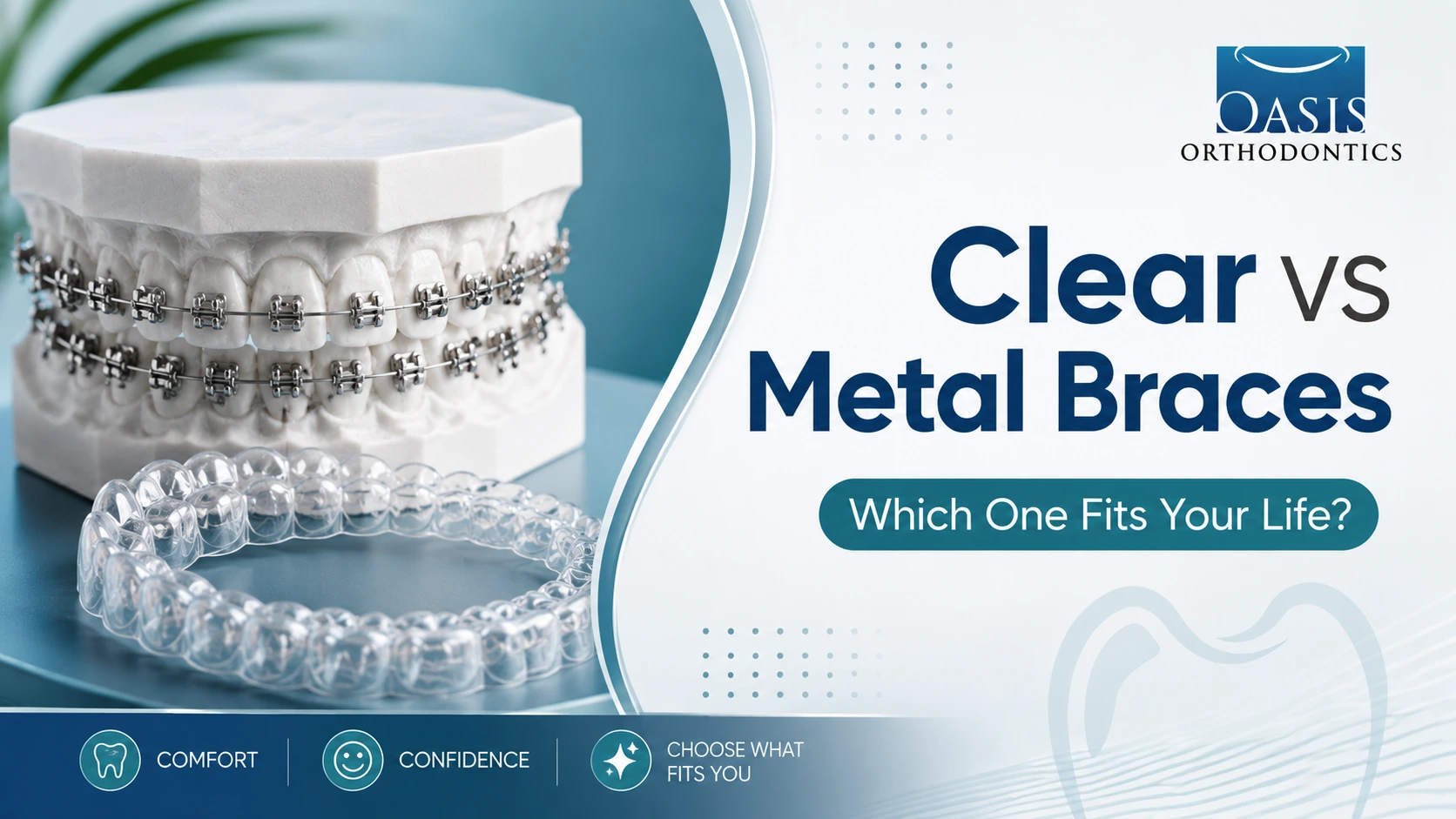
Choosing between clear braces and metal braces is one of the first decisions you make when starting orthodontic treatment, and for most patients, it comes down to two things: how visible you want your braces to be, and what your case actually requires.
Both options use the same bracket-and-wire system to move teeth. Both address the full range of orthodontic problems from crowding to bite correction. The difference is in the material, what that means for daily life, and where each option has a genuine clinical edge.
What Clear Braces Are and How They Work
Clear braces use ceramic or tooth-colored brackets instead of stainless steel ones. The brackets are bonded to each tooth and connected by a wire, exactly like metal braces, but the bracket material is designed to blend with the natural shade of your teeth rather than contrast against it.
Some clear braces use fully ceramic brackets. Others, including Radiance brackets, use a high-clarity material that sits closer to transparent than tooth-colored, making them even less noticeable. The wire running through the brackets is typically silver, though tooth-colored wires are sometimes available.
The mechanism for moving teeth is identical across both systems. Bone remodeling occurs as the wire applies pressure through the brackets, gradually guiding teeth into new positions over time.
Where Metal Braces Have the Clinical Edge
Metal braces have been the standard in orthodontics for decades and remain the most common choice for good reason.
Stainless steel brackets are stronger and more resistant to chipping or fracturing than ceramic. For patients with complex bite corrections, significant crowding, or cases requiring high and sustained force on specific teeth, metal delivers that force reliably. Ceramic brackets can chip under impact or when subjected to hard foods repeatedly, which makes metal the more practical choice for younger patients, contact sport athletes, and anyone whose lifestyle puts brackets at higher risk of damage.
Maintenance is also more straightforward. Metal brackets do not absorb color from food or drink, so staining is not a concern throughout treatment. From a clinical standpoint, metal gives orthodontists the greatest degree of control across the widest range of cases, and at a lower cost than ceramic alternatives.
Where Clear Braces Make a Real Difference
Appearance is the main reason patients choose clear braces, and for the right patient it is a sound one. Ceramic brackets blend with the natural shade of your teeth rather than contrasting against them. For anyone spending 18 months or more in front of colleagues, clients, or a camera, that reduction in visible hardware has real practical weight.
Clinically, clear braces perform well for mild to moderate cases with results that match metal. For complex cases requiring heavy or very precise force over a long period, metal has a mechanical edge. Where your case sits on that spectrum is what determines how significant the trade-off actually is for you.
The Day-to-Day Differences Worth Knowing
Staining. Ceramic brackets resist staining well, but the elastic ligatures that hold the wire in place can pick up color from coffee, tea, and red wine. Ligatures are replaced at each adjustment appointment, so staining resets regularly, but it requires consistent brushing after meals between visits.
Treatment time. For most cases the duration is comparable. Metal has a marginal advantage in highly complex cases because the brackets sustain force more precisely under heavy loads, but for the majority of patients the difference is not clinically meaningful.
Comfort. Both bracket types have become smaller and smoother over the years. Initial discomfort after adjustments is similar across both. Some patients report ceramic feeling slightly smoother against the lip, though experience varies individually.
Cost. Clear braces cost more than metal in most practices. How much more depends on the case and the payment options available. Flexible financing can make either option accessible.
Which Braces Option Makes More Sense for Your Situation?
Metal braces tend to be the stronger clinical choice when the case involves complex bite corrections, significant crowding, or movements requiring sustained force over a long period. Younger children are generally better suited to metal because they are less consistent with food restrictions and oral hygiene, and ceramic brackets are less forgiving of that. When cost is the primary consideration, metal is also the more accessible starting point.
Clear braces make the most sense for older teenagers and adults whose cases fall within the mild to moderate range, who have established hygiene routines, and for whom the aesthetic difference during treatment genuinely matters. Many moderate cases sit within the clinical range of both options, and when the orthodontics do not decide for you, the choice comes down to how you live and what makes sense financially.
Frequently Asked Questions
Are clear braces as effective as metal braces? For mild to moderate cases, yes. Both use identical mechanical principles to move teeth. For highly complex corrections requiring maximum force and precision, metal gives orthodontists slightly greater control.
Do clear braces take longer than metal braces? Not typically. Treatment duration is comparable for equivalent cases. Metal may have a marginal speed advantage in very complex cases, but for most patients the difference is negligible.
Do clear braces stain? The ceramic brackets themselves rarely stain permanently. The elastic ligatures can pick up color from coffee, tea, and certain foods, but ligatures are replaced at every adjustment appointment.
Can adults get metal braces? Yes, without any limitation. Age is not a barrier to either option. The choice for adults comes down to aesthetic preference, case complexity, and budget.
What is the difference between clear braces and Invisalign? Clear braces are fixed ceramic brackets bonded to your teeth for the full duration of treatment. Invisalign uses removable custom-fitted trays with no brackets. Both treat a wide range of cases. The right choice depends on what your teeth need and how you live day to day.
Are clear braces more expensive? Generally yes. Ceramic brackets cost more than stainless steel, and the difference shows up in treatment fees. The gap varies by practice and case complexity. Payment plans can make either option workable regardless of the upfront difference.
Get a Direct Answer for Your Case
Knowing how two options compare in general only goes so far. What each one means for your specific timeline, case, and daily life depends on what your teeth and bite actually require.
At Oasis Orthodontics in Markham, Dr. Khushee Sharma-Fung personally evaluates every patient, reviews the full clinical picture, and gives you a clear recommendation based on what she sees. Book your consultation and leave knowing exactly which option fits your case and why.